Read the screen's own care instructions
Shut down the laptop and disconnect power before cleaning. Check the manufacturer's guidance for the exact model, especially if the display has a special surface treatment. Instructions for one screen coating should not be applied automatically to another.
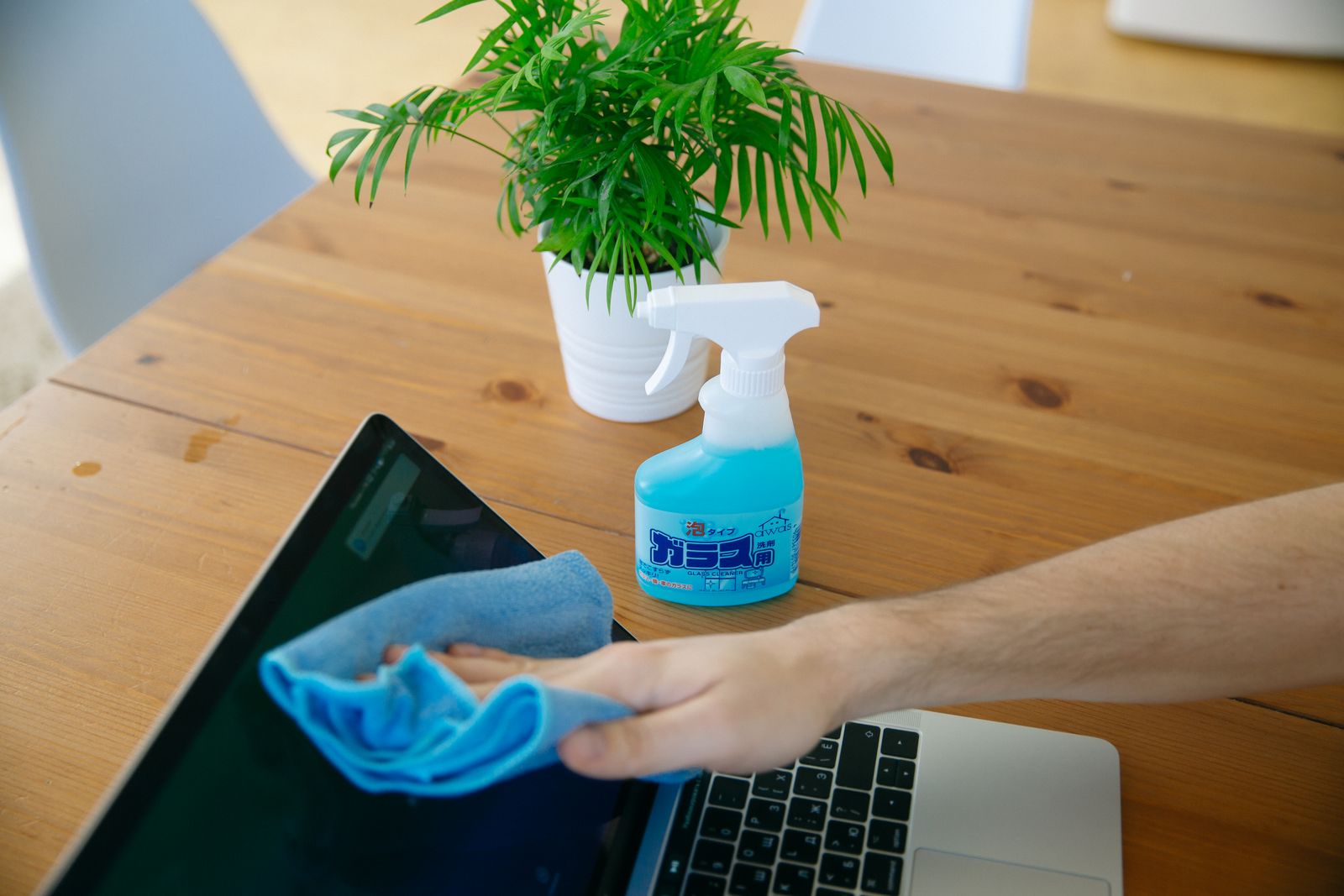
Use a clean, soft, lint-free cloth. A cloth used on a desk or glasses may carry grit, grease or cleaning residue. Keep one for the screen, and inspect it before wiping. Paper towels and rough fabrics are poor substitutes when the manufacturer calls for a soft cloth.
Begin with light, dry passes to remove loose dust. Support the lid without pressing on the panel, and avoid rubbing hard at one spot. If a mark does not move easily, pause rather than increasing pressure.
Moisten the cloth, not the laptop
If the device's instructions permit a damp cloth, apply only the recommended liquid to the cloth and keep it barely damp. Never spray directly at the screen. Liquid can reach the bezel, keyboard or openings before you notice it.
Apple's cleaning guidance is an example of why model-specific instructions matter: it gives different advice for different products and display treatments. Follow your own manufacturer's directions rather than treating a bottle labeled screen cleaner as universally suitable.
Wipe gently, then use a dry part of the cloth if the instructions allow. Give the surface time to dry before deciding whether another pass is needed. Cleaning residue or an over-wet cloth can leave streaks that look like remaining dirt.
When a mark is not dirt
Inspect the screen from another angle after it has dried. A scratch, worn coating or pressure mark will not disappear with more cleaning. If the mark remains unchanged, stop and seek the manufacturer's advice rather than trying abrasives or household solvents.
Keep the cleaning cloth free of detergent residue and let it dry fully after washing according to its care instructions. Store it away from crumbs and loose objects in your bag.
A short, gentle clean is usually enough for everyday fingerprints. The aim is a readable surface without introducing liquid or abrasion, not a polished finish achieved by repeated force.