Read the two-device output table
Find the manufacturer's power-allocation table for the exact charger. It should describe what each port provides alone and in combination. A charger advertised with a large total does not necessarily divide that total in the way your devices need.
Compare the available output with the laptop and phone requirements. A laptop may charge slowly or draw from its battery during heavy work if the shared output is insufficient. A phone may still charge perfectly well from the smaller allocation. The useful goal is a suitable combination, not the highest number on either box.
Some chargers redistribute power when another device is connected or removed. Read whether the manufacturer describes any brief interruption during that process, and test it with your devices. Avoid depending on a charging port to power something that cannot tolerate an interruption unless the product explicitly supports that use.
Cables and charging standards still count
Use cables rated for the required power and connectors. The larger charger's capabilities do not upgrade an unsuitable cable. If a device's fastest mode requires a particular charging standard, confirm that the charger and cable combination supports it.
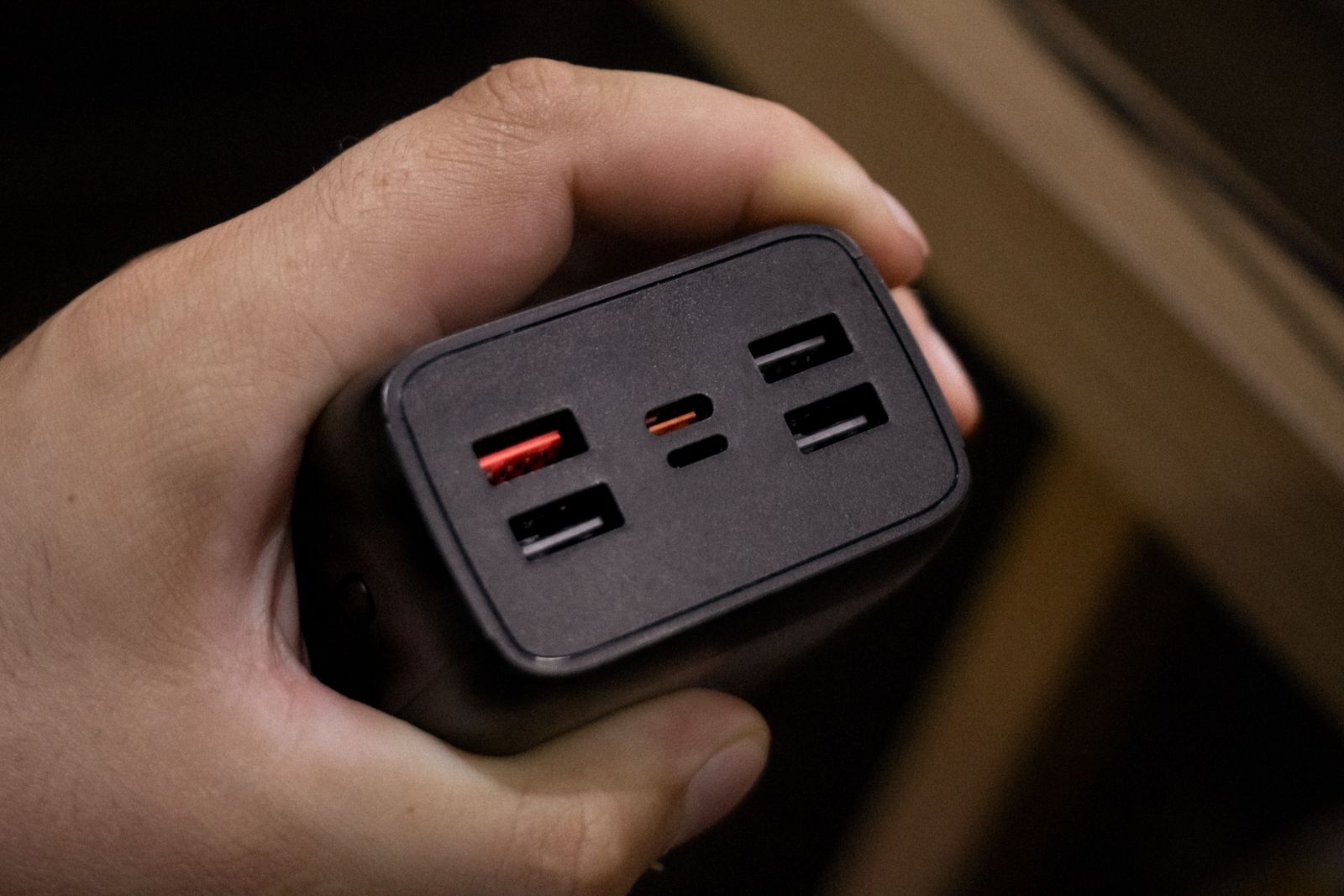
Check whether the useful output is available from either port or only one labeled socket. A small label or a consistent cable arrangement can prevent the laptop from ending up on the lower-power port when you are packing quickly.
Include the adapter's size and plug design in the decision. A heavy charger may sit poorly in a loose outlet, while closely spaced sockets can make a wide body inconvenient. For travel, check input ratings and destination plug requirements separately from the USB outputs.
Test a normal afternoon
Connect both devices at the battery levels and workloads you normally use. Check that each reports charging and that the laptop behaves as expected during ordinary work. A test with both devices nearly full may conceal a limitation that appears when both need substantial power.
Keep the charger uncovered and follow its ventilation instructions. Disconnect it if the enclosure or cable is damaged, or if it behaves abnormally. Do not infer safety from the fact that a charging symbol appears.
If the shared adapter creates frequent compromises, two smaller chargers may still suit you better. If it reliably handles the pair and reduces what you carry, label the intended cable combination and keep it together.