Give the signal a less difficult route
Look at the rooms that need reliable coverage and the obstacles between them and the router. A low corner behind a television or inside a cabinet is a different starting point from an open shelf near the middle of the home. Construction materials and layout matter, so there is no single distance that guarantees coverage.
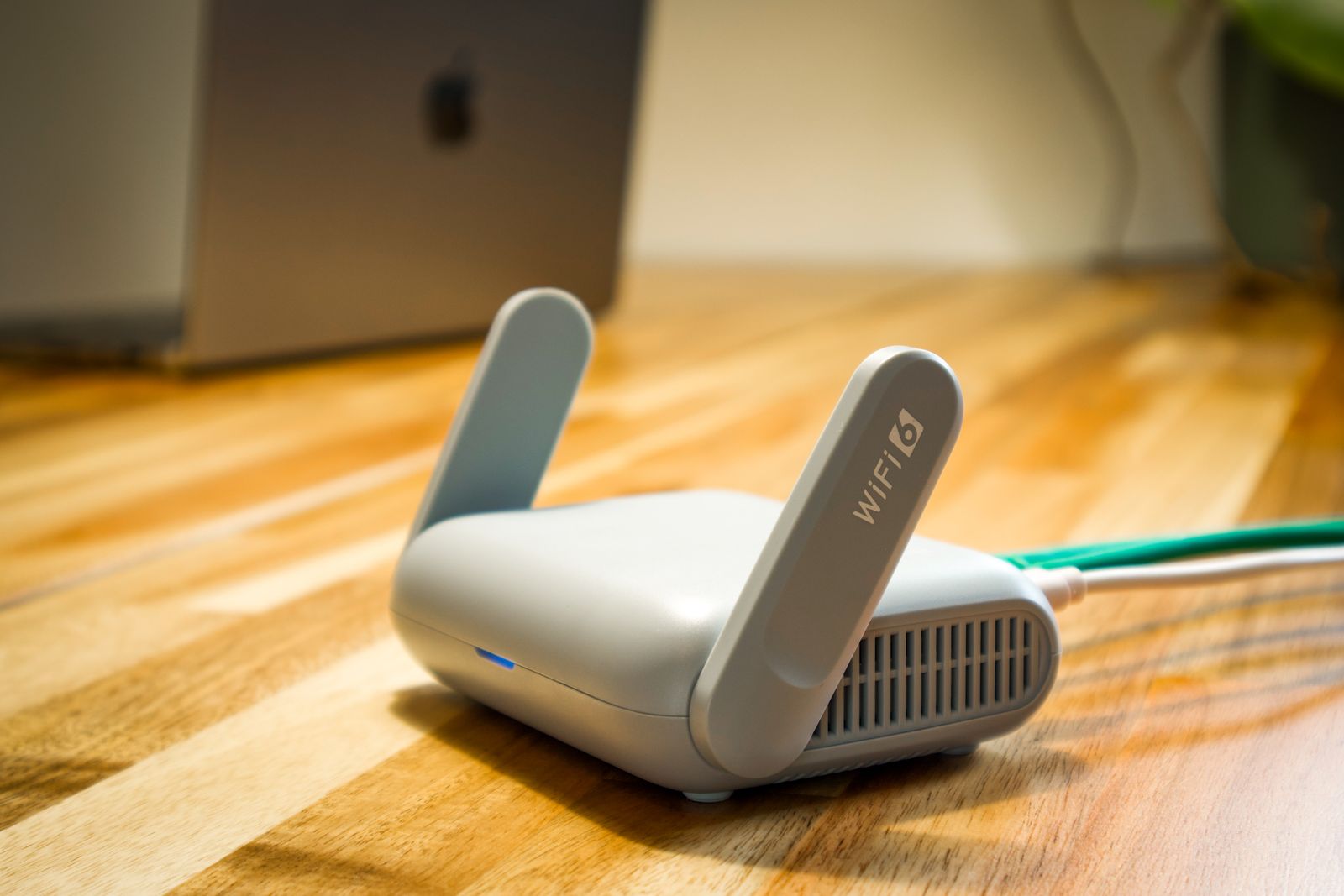
Google's placement guidance for its Wi-Fi equipment favors an elevated, open location and warns against obstructions. Treat that as a useful starting principle, then follow the positioning instructions for your own router, including any antenna guidance. Do not assume every model should be laid flat or stood upright.
Move the router only as far as the power and network connections safely allow. Keep cables away from walking routes and do not stretch a short lead under tension. If the modem or wall connection must remain where it is, a suitable longer Ethernet cable may offer more freedom for the router.
Avoid enclosing the device to make it disappear visually. It needs the ventilation specified by its manufacturer, and the enclosure itself may make reception worse. A visible, stable shelf is often easier to live with than a hidden setup that needs frequent attention.
Test the rooms, then decide whether to add equipment
Use the same laptop or phone in a few repeatable places: the desk, the bedroom, and the room where calls fail. Try an ordinary task as well as a speed test. Note the router position each time so you can compare changes without relying on memory.
If one location improves while another deteriorates, decide which matters more or try a modest intermediate position. Do not move the router, change several settings, and add a repeater simultaneously. You will lose the ability to tell which change helped.
For a mesh system, an extra point needs a good connection back toward the rest of the network. Putting it directly in the worst dead spot can leave it with little useful signal to extend. Follow the system's placement and connection test rather than spacing units only for appearance.
If coverage remains poor after sensible placement changes, keep the room-by-room notes. They make a discussion with the provider or equipment maker more useful and help you choose whether an additional access point, a wired connection, or a different layout addresses the actual problem.